
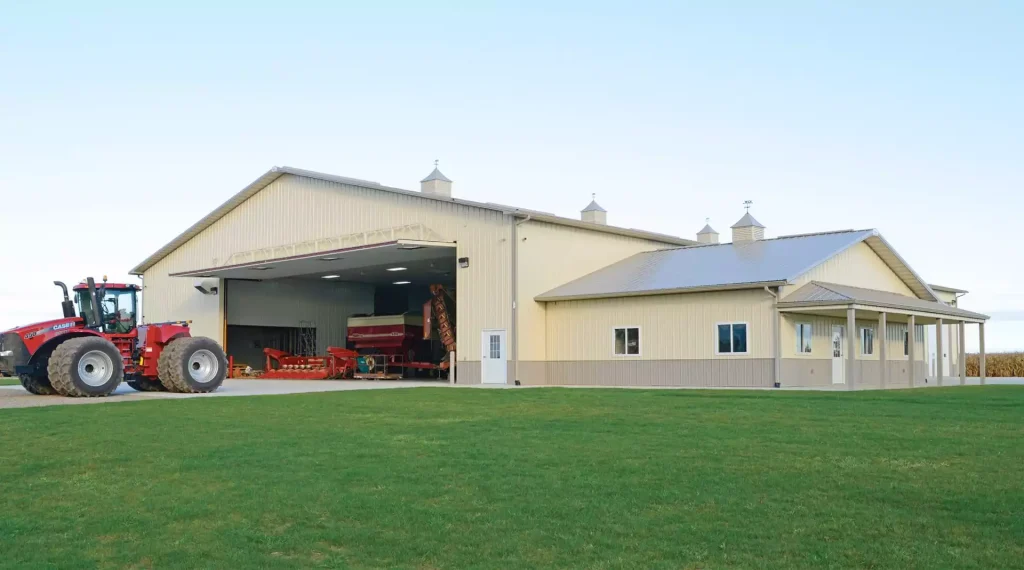
In today’s farming, there is a need for durable, flexible, and efficient structures. That is why steel in the agricultural sector has become increasingly popular among farmers and cattle owners. Agricultural metal buildings are highly reliable, designed to meet agricultural needs and provide equipment storage, animal housing, and more.
Compared to conventional materials, steel structures do not wear out easily, are not affected by weather, pests, or fires, and are therefore well-suited for rural settings. With ongoing farm modernisation, metal buildings offer scalable solutions that enhance productivity and protect assets. Whether for crops, cattle, or equipment, agricultural steel structures deliver performance, affordability, and financial certainty over the coming years.
Reasons to use Metal Buildings in Agriculture.
Farmers choose steel buildings for their robustness and efficiency in challenging environments. Cultural activities require structures capable of sustaining long-term, machinery, and daily operations. The use of steel in agricultural buildings is preferable to wood because it does not rot, attract insects, or sustain moisture damage.
Such buildings are also characterised by shorter construction periods and less idle time, especially during peak seasons. Also, the steel buildings may be designed for ventilation, insulation, and future expansion. They can accommodate both small and large farms. Steel buildings are also very reliable for modern agricultural needs as they have low maintenance costs and a high service life.
The significant benefits of Metal Agricultural Buildings.
Exemplary Strength and life span.
Farmers select steel buildings designed to withstand extreme conditions, including heavy snow, strong winds, and extreme heat. Steel does not deform or crack, ensuring structural stability over decades of use. This strength makes steel suitable for livestock security and machinery applications.
The advantage is that farmers do not have to spend as much on repairs and year-round maintenance. Steel structures also resist fire, thereby providing an additional layer of safety in agricultural settings.
Cost-Effectiveness in the Long Run.
The cost-efficient steel constructions are highly cost-effective in the long term. Initial prices are competitive, with savings from low maintenance, energy efficiency, and an extended lifespan. Steel buildings reduce replacement costs and offer high returns on investment.
This is due to their modular design, which enables future expansion without significant reconstruction and allows farms to increase without unnecessary expenses.
Multipurpose usages in Agriculture.
Livestock Houses and animal shelters.
Livestock are provided with secure, well-ventilated housing in steel barns and shelters. The steel buildings offer flexible layout options to ensure the animals are comfortable, calm, and clean. Good air circulation and an insulated setup help ensure healthy conditions for cattle, poultry, and other livestock year-round.
Storage of Equipment and Machinery.
The farm equipment is a significant investment; protection is necessary. The steel outbuilding provides ample storage for harvesters, tools, and tractors. Large spans with clear interiors eliminate interior columns, making equipment movement and organisation easier and reducing the risk of weather-related corrosion.
Considerations of Climate and Regions.
Agricultural structures must perform effectively across diverse climatic conditions. Steel buildings can be designed to suit local wind, snow, and seismic conditions. Reflective roofing and insulation help reduce heat gain in hot climates. Steel buildings help sustain heavy snow loads in colder climates and keep interiors warm. This flexibility maintains performance across all environments, making steel a reliable option for farms of all types and locations.
Economic Benefits and Farmers’ Costs.
Investing in a custom steel building helps farmers control costs. Steel buildings require less repair and maintenance than traditional buildings. Their energy-efficient designs reduce heating and cooling costs, and their robust construction lowers insurance premiums. Resale opportunities are also a substantial value for many farmers, as steel building options for sale have strong market demand. These economic benefits help maintain stable farm operations and long-term economic sustainability.
Design, Customisation, and Build alternatives.
Agriculture can use customised structures tailored to individual requirements thanks to modern steel building designs. Customisation ranges from door placement to roof styles, ensuring functionality and efficiency. A professional steel building builder will help maximise the liveable or multi-use facility layouts.
Skylights, ventilation systems, and insulation are among the features that enhance usability. Even Steel buildings can support viable steel home designs for living or office use near the farm.
FAQs
What are agricultural metal buildings commonly used for?
They serve as housing for livestock, storage for equipment and crops, and as workshops and processing facilities.
Are steel buildings suitable for long-term agricultural use?
Yes, steel buildings are strong, low-maintenance, and engineered to last for decades.
Can I customise agricultural structures for my farm?
Absolutely. Steel buildings can be tailored to your operational requirements in size, structure, and functionality.
Conclusion
The use of metal buildings still defines modern farming, as they provide long life, flexibility, and value. Ag metal buildings are used for livestock shelters and equipment storage, and they can be expanded as your business grows.
Selecting a suitable design and builder ensures the highest performance and efficiency. For farmers seeking reliable, cost-effective agricultural buildings, ForeMost Buildings Inc. offers high-quality steel building solutions that help sustain productivity in today’s market and support future growth.