
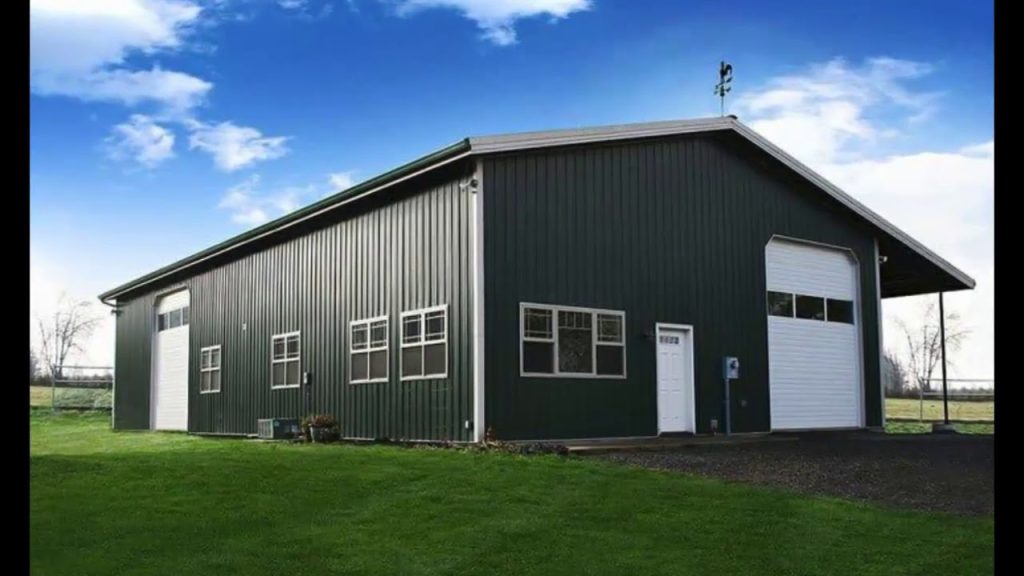
A business investing in a steel building faces its most significant decision: determining the appropriate size. The appropriate size influences workflow efficiency, storage capacity, employee comfort, and long-term operating expenses. Whether planning a warehouse, workshop, or office facility, understanding the size of metal buildings and how they suit your business needs will help you avoid costly errors.
Rather than making assumptions or replicating competitors, a strategic plan will ensure your building can support both current processes and future development. In this guide, we will dissect the process for determining the optimal size and outline the key factors to consider when sizing a metal building. We will outline common mistakes to avoid so you can make a confident, informed decision.
Why Choosing the Right Metal Building Size Matters
The right size of a metal building is not measured solely in square feet; it is based on productivity, safety, and growth potential. An oversized building will be inefficient and may unnecessarily increase construction and energy costs, whereas a building that is too small will limit movement, equipment placement, and efficiency.
The appropriate size will provide an easy workflow, adequate storage, and comfortable office space in a metal building when needed. It is also used to ensure businesses comply with zoning and building regulations without requiring later revisions at a high cost.
By considering your operational needs and long-term plan, you can select building sizes that meet your functional and cost requirements. Finally, the appropriate size will help you to grow and defend your investment.
Step-by-Step Guide to Determining Your Metal Building Size
Step 1: Define the Primary Purpose
The initial step in identifying the correct building size is to determine how it will be used. Will it be a warehouse, factory, retail store, or workshop? The dimensions of steel buildings required for each purpose will vary by ceiling height and open floor area. Storehouses, such as warehouses, typically require wide clear spans, whereas offices require smaller compartments.
Companies with machinery or vehicles should consider space for manoeuvring and door clearance. The purpose should be established to reduce the size of a standard metal building, ensuring it is applicable and designed for future redundancy. All this is because a clear purpose will ensure your building is efficient for your day-to-day operations.
Step 2: Map Your Workflow & Operations
Once the purpose has been identified, draw the flow of people, equipment and materials within the space. Effective workflow design can ensure that the dimensions of the metal building chosen support, rather than hinder, productivity. Take into account the entry and exit points, equipment placement, storage areas, and employees’ working areas.
For workshops and service facilities, a useful benchmark is a review of standard shop sizes, though it may need to be customised. A strategic design minimises congestion and enhances safety. The operations visualisation lets you select a building size that fits your processes and doesn’t require later modifications.
Key Factors to Consider When Choosing Building Size
The size of the ideal metal building is determined by several factors that extend beyond simple square footage. The equipment, racking systems or overhead cranes require precise height requirements. The placement of interior columns affects usable space, particularly in wide-span construction. Budget is a significant factor, as larger building sizes increase materials and foundation costs.
Another essential factor is future expansion; selecting flexible metal building sizes can help reduce long-term costs. Site limitations, zoning regulations, and local codes also influence the permissible dimensions for steel buildings. Assessing these factors together will ensure your building is operational, compliant, and economically viable.
How to Calculate Your Ideal Metal Building Dimensions
The correct metal building calculations begin with estimating the total available square footage. Indicatively, add all the areas needed, such as production, storage, offices, and circulation areas, and then add an expansion area. Comparing standard metal building sizes can serve as a point of reference, though custom sizing offers superior performance.
Clearance must be provided in height calculations to accommodate equipment, lighting, and ventilation. Most companies use standard metal building sizes for comparison, and building sizes should always be calculated based on real operational needs. A practical approach will ensure your building is adaptable to current requirements and accommodating of future modifications.
Common Mistakes to Avoid When Choosing Building Size
Another prevalent error is undersizing to reduce initial costs, which will significantly increase costs in future expansions. Excessive oversizing is also a challenge that increases construction and energy costs. Even large metal buildings can become constrained when workflow efficiency or equipment clearance is ignored.
Corporations also overlook that their business will grow, choosing standard metal building sizes that do not accommodate future expansion. The other error is the failure to plan commuter metal building office space, resulting in inefficient retrofits in the future retrofits. It is the way to avoid these traps and ensure your building is operational, cost-effective, and versatile.
Frequently Asked Questions About Metal Building Sizes
What are standard metal building sizes?
The standard metal building sizes range from a small 20×20 building to a large commercial building over 100×200 feet, depending on the purpose.
What are standard shop sizes for metal buildings?
Shop sizes are commonly 30×40, 40×60, and 50×100 feet, providing a flexible work area for equipment and vehicles.
How do I choose the right metal building office space?
The office space should be designed in coordination with the core building, taking into account staffing requirements, layouts, and future expansion.
Final Thoughts: Choosing a Size That Grows With Your Business
The selection of the appropriate size of a metal building is a tactical move that affects both efficiency and expenses, and the success of the enterprise in the long term. With knowledge of your operations, workflows, and future expansion plans, you can choose metal building sizes that align with your business objectives. Having professionals with a long history in business, such as ForeMost Buildings Inc., will enable them to offer you the right advice, proper sizing, and a solution that fits your industry. A building is not just a structure; a proper building is an investment in development, efficiency, and value.