
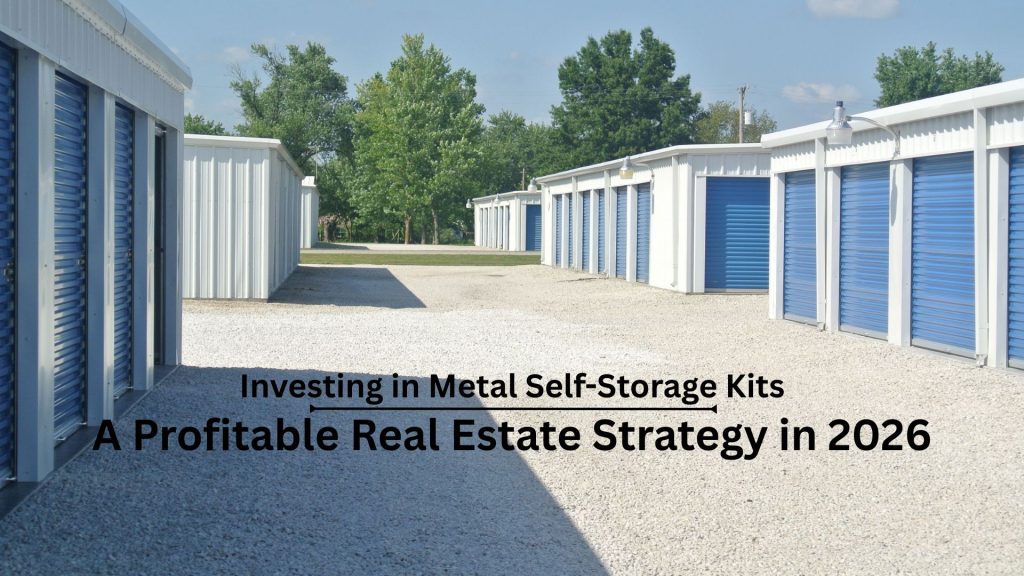
Metal self-storage has emerged as one of the strongest and most significant scalable real estate investments. The demand is driven by increased urban density, downsizing patterns, and small-business storage needs. Self-storage unit kits are becoming increasingly attractive to investors because they are faster to develop, less expensive to construct, and durable over the long term.
Compared with conventional construction, metal construction allows faster entry and better, more predictable returns. This guide outlines how storage unit building kits can drive high cash flow and reduce operational complexity. As a first-time investor or an advanced investor looking to add to an existing portfolio, understanding the financial and operational benefits of metal storage kits will enable more informed, data-driven decisions.
Understanding Metal Self-Storage Kits
Metal storage kits are ready-built structures designed for storage. Such self-storage unit building systems comprise pre-engineered steel framing, wall panels, roofing, and fasteners, making construction easier. In contrast to traditional construction, kits are prefabricated off-site and assembled quickly, reducing labour costs and weather-related delays.
Depending on land size and market demand, investors can choose from mini storage units or large multi-unit designs. Its modular design makes it easy to add, making it suitable for developing strategies in phases. Storage kits provide a stable foundation for building a profitable self-storage business, with predictable expenses and efficient installation.
Why Self-Storage Is a Strong Investment Sector
During economic downturns, self-storage has consistently outperformed most real estate assets. Demand does not change because individuals require storage when changing their lives, such as when moving, reducing, or expanding their business. Storage unit building kits reduce overhead costs and allow flexible pricing.
Moreover, self-storage typically requires few workers and minimal maintenance. Another benefit is that investors will have shorter lease terms and can adjust their rents quickly in efficient markets. All these benefits render self-storage one of the least vulnerable types of investments during a recession, particularly when combined with high-durability metal construction.
Benefits of Investing in Metal Storage Kits
Lower Costs and Faster Construction
Development costs are significantly reduced by selling self-storage kits. Ready-prepared parts reduce build time and help investors generate revenue sooner than if they spend long periods building and financing the project.
Longevity, Durability & Maintenance Advantages
Compared to wood, steel structures are fire-resistant and weather-resistant. Mini storage unit building kits require minimal maintenance, thereby maintaining their profitability and asset value over the long term and reducing repair costs.
Financials & Return on Investment
Metal self-storage facilities have a high ROI due to lower construction and operating costs. Investor budgets for storage unit building kits can be managed more precisely, given the predictability of material prices. The primary sources of revenue are monthly rent, late fees, and additional fees for climate-controlled units. In well-researched markets, occupancy rates can be above 85%, providing steady cash flow.
Self-storage has higher margins and fewer tenant issues than apartments or retail. Rental increases and expansion opportunities also enhance returns with time, making metal storage facilities a good long-term investment.
Tax Strategies and Depreciation Benefits
Investors can unlock substantial tax benefits in self-storage. Metal buildings are eligible for accelerated depreciation, allowing owners to deduct a large portion of the building’s cost in the early years. Cost segregation studies may also yield additional deductions for self-storage building kits by identifying components eligible for accelerated depreciation. Such advantages enhance cash flow and reduce taxable income, particularly in the early years of operation. For many investors, tax efficiency alone makes metal self-storage more appealing than other commercial real estate assets.
Market Analysis & Competitive Edge
Market research is the key to successful self-storage investing. Before buying the storage units kits for sale, investors must consider population growth, housing turnover, and business density. The best performance is achieved by facilities located near residential or commercial areas.
It is also necessary to conduct a competitive analysis; oversaturated markets can limit pricing power. Metal kits offer an advantage by enabling competitive pricing without reducing margins. Unit size and layout flexibility help operators respond quickly to changes in demand.
Choosing the Right Storage Kit & Supplier
Comparing Kit Providers
Mini storage unit kits are not of equal quality. Find suppliers that offer certified steel, customisation, and strong warranties. To be successful in the long run, it is essential to have quality engineering support and detailed installation documentation.
By collaborating with an established manufacturer such as ForeMost Buildings Inc., you can be confident that your storage facility will be durable, efficient, and expandable, while also complying with local construction regulations.
Site Planning & Design for Maximum Profit
Thoughtful design has a direct bearing on profitability. Depending on local demand, investors should select unit mixes that balance small, medium, and large units. Self-storage unit kits can be easily customised for climate-regulated units, RV storage, or drive-up access. Efficient layouts will maximise rentable square footage and minimise wasted space. Cost reduction during the initial design stage can extend the facility’s growth potential over the long term.
Potential risks and ways of reducing them.
Self-storage, like any other investment, is risky. The typical obstacles are zoning restrictions, permit delays, and market overcrowding. The adaptability of storage unit building kits helps mitigate these risks, as they can be developed in phases and reconfigured to accommodate layout changes. Feasibility studies and experience with suppliers help minimise costly errors. Long-term returns are also safeguarded by proper insurance and professional management.
Operational Best Practices
Efficient operations enable profitability. Billing, access control, and security automation tools reduce headcount and enhance the customer experience. Keypad access and surveillance systems are among the modern technology integrations in metal facilities built with self-storage unit building kits. Frequent pricing adjustments and effective online marketing also contribute to high occupancy levels and maximise revenue.
Frequently Asked Questions
Are self-storage unit kits profitable for first-time investors?
Yes, self-storage unit kits are a good option for beginners because they are not very difficult to maintain, and expenses are predictable.
What is the difference between mini storage unit kits and standard kits?
The mini storage unit kits are designed for a small footprint and local demand.
Are storage unit building kits customizable?
Most storage unit building kits are available in flexible sizes, layouts, and with additional features.
Conclusion
Metal self-storage is a time-tested method of creating scalable, robust real estate revenue. Self-storage kits have strong potential to attract investors at all levels, driven by high demand, tax benefits, and low operating expenses.
Proper selection of design, market, and supplier is the principle of success in the long term. By collaborating with reputable providers such as ForeMost Buildings Inc., investors can develop high-performing storage facilities that generate recurring cash flow and sustainable value.