
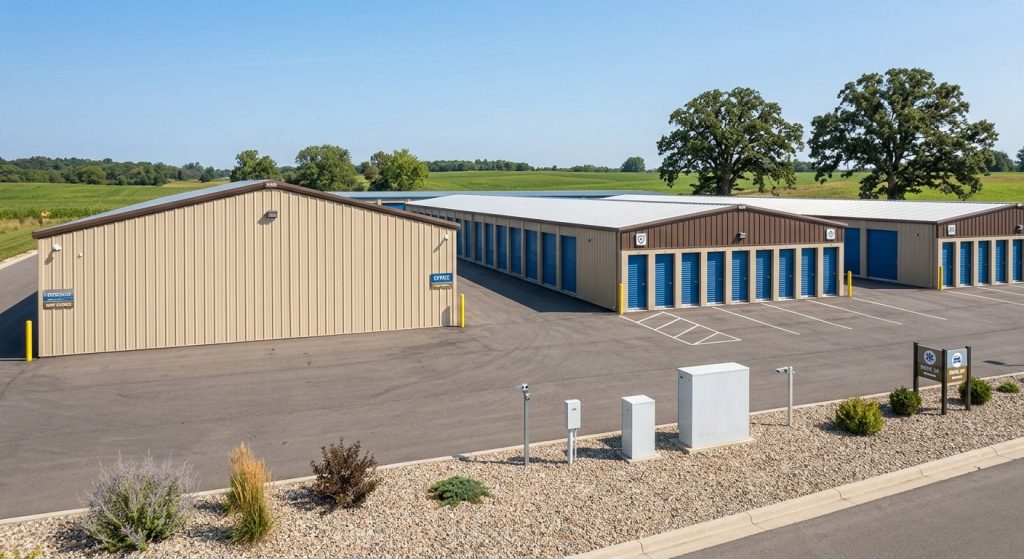
Storage units run anywhere from about $30 to $250 a month for common sizes, depending on the size, the location, and what features come with it. SpareFoot’s national pricing data puts the average at $89.09 a month across all sizes and types – a useful baseline, though the facility near you might charge more or less, and climate control or premium access can push it higher.
And the rent that you pay each month is only one part of the total storage unit cost. Insurance, admin fees, locks, taxes, climate control, and the day your intro discount runs out can all push the real price higher than the number you saw advertised.
This guide walks through typical storage prices by unit size, the fees worth checking before you sign anything, and how to figure out how much storage space you actually need instead of paying for a room you won’t use.
Key Takeaways
- Storage unit costs typically range from $30 to $250+ per month, depending on size, location, and features.
- The advertised rate isn’t the full cost. Insurance, admin fees, locks, taxes, and climate control can increase your monthly bill.
- Compare the total monthly cost and unit features instead of choosing the lowest advertised price.
- Choose the right storage space based on what you’re storing to avoid paying for unused space.
- For facility owners, local demand, unit mix, and smart building design are key to long-term profitability.
Average Storage Unit Cost
Storage prices are all over the map depending on where you live, but the numbers below give you a solid starting point for comparing local options.
| Storage unit size | Average Monthly Cost (2026) | What it may hold |
| 5×5 | $34.89 | Boxes, seasonal items, and small furniture |
| 5×10 | $50.92 | Contents of a studio or small one-bedroom space |
| 10×10 | $80.43 | Contents of a one- or two-bedroom home |
| 10×15 | $109.03 | Contents of a two- or three-bedroom home |
| 10×20 | $130.14 | Contents of a larger home or larger household items |
Note: These are average monthly prices based on SpareFoot’s 2026 storage pricing data, current through May 2026, rather than guaranteed rates. Your actual monthly rate will depend heavily on your ZIP code, unit features, local demand, and facility availability.
What is the Real Monthly Cost of a Storage Unit?
The price shown in an advertisement may only represent the base rent. Ask the facility for the total move-in cost and the ongoing monthly cost before making a reservation.
Insurance
Most storage facilities require you to have proof your items are covered by insurance. Although many home/renters’ insurance policies include some degree of off-premises coverage, their limits and exclusions can differ substantially.
Administrative and Setup Fees
Some facilities charge a one-time administrative or setup fee when you begin your rental. The amount varies by operator and location, so it should not be assumed to be part of the first month’s rent.
Lock Costs
You may need to purchase an approved lock from the facility or bring one that meets its requirements. Ask what lock type is accepted before arriving.
Taxes
Storage rentals may be subject to state or local taxes in some markets. The facility should be able to tell you whether tax is already included in the displayed price.
Promotional Rates
Discounts such as “first month free” or reduced introductory rent can lower your move-in cost. They do not always lower your long-term cost.
Check how long the promotion lasts, what the standard rate will be afterward, and whether the offer requires a minimum rental period or automatic payments.
A Simple Cost Example
Suppose a unit has an advertised rent of $89 per month. If insurance costs $15 per month and the facility charges a $25 administrative fee and requires a $20 lock, your first payment could look like this:
| Charge | Example amount |
| First month’s rent | $89 |
| Insurance | $15 |
| Administrative fee | $25 |
| Lock | $20 |
| First-month total | $149 |
| Ongoing monthly cost | $104 |
This is only an example. The actual charges must be confirmed with the facility.
What Affects Storage Prices?
Location and Local Demand
Storage space usually costs a bit more in densely populated areas where the land, construction, and day-to-day operating expenses are pretty high. Places near city centers, apartment districts, universities, or major highways can also be pricier, simply because people want it more.
If you choose a unit outside the city it may feel cheaper at first, but think about how frequently you really will stop by it. A long drive can make a modest rent saving less worthwhile.
Unit Size
Larger units cost more each month because they provide more floor space. They may still offer a lower cost per square foot, especially when compared with compact 5×5 units.
Climate Control
Having climate-controlled storage means that temperature regulation and, at times, humidity regulation takes place. People choose this type of storage for their wooden furniture, electronic devices, artwork, photos, papers, musical instruments, and other objects that may suffer from serious climate variations.
Access and Unit Location
Drive-up units are convenient for heavy furniture, tools, equipment, and frequent loading. Indoor units may offer added protection from weather. Ground-floor access, elevators, 24-hour entry, electricity, individual alarms, and premium security features can also affect the monthly rate.
Availability and Season
Prices can change as units fill or become available. Demand often rises during moving season, especially from late spring through summer. Seasonality varies by market, so delaying a move solely to obtain a lower rate may not always be practical.
How Much Are Storage Units for 3, 6, or 12 Months?
Monthly rent can appear manageable until it is multiplied across a longer rental period.
| Monthly storage cost | 3 months | 6 months | 12 months |
| $75 | $225 | $450 | $900 |
| $100 | $300 | $600 | $1,200 |
| $150 | $450 | $900 | $1,800 |
| $200 | $600 | $1,200 | $2,400 |
| $300 | $900 | $1,800 | $3,600 |
These totals do not include one-time charges, insurance, taxes, or future rent increases.
Most self-storage agreements run month to month, and rates may change during a longer stay.
Ask whether your initial rate is guaranteed for a specific period. A slightly higher rate with clear terms may be easier to budget than a low promotional price that can change soon after move-in.
Are Cheap Storage Units Actually Cheaper?
Cheap storage units can save money, but the lowest advertised price is not always the best deal.
Compare the full monthly amount rather than the headline rate. A $60 unit with mandatory insurance and extra access charges may cost more than a nearby $75 unit with fewer added fees.
Distance matters too. A lower-priced facility may not be economical when you need to make regular trips across town. The same applies to unit size. Renting a unit that is too small can lead to a second rental, while an oversized unit leaves you paying for unused space.
Before signing, ask the facility to confirm:
- The total amount due at move-in
- The ongoing monthly rent after any promotion
- Mandatory insurance and other charges
- The unit’s size, access type, and climate-control status
- Whether the rental rate is guaranteed
- The notice required before moving out
Written answers make it much easier to compare storage rentals fairly.
How to Choose the Right Storage Space Without Overpaying
Picking the right size comes down to a few practical steps.
- Start by listing everything you plan to store. Measure the bulky stuff – couches, appliances, cabinets, mattresses – instead of eyeballing it from memory.
- Think about how often you’ll actually need to get in there. Packing for a move you won’t touch again? Pack it tight. Storing seasonal items or business inventory you’ll dig through regularly? Leave yourself a narrow aisle and keep what you use most near the door.
- Shelving and stackable bins go a long way toward using the vertical space. Just skip the unstable stacks, and don’t pile heavy boxes on top of anything fragile.
- Before you commit, price out two sizes next to each other. Going from a 5×10 to a 10×10 roughly doubles your floor space, but the rent goes up with it. Only size up if you actually have a reason for the extra room.
What Storage Rental Prices Mean for Facility Owners
The pricing patterns above matter to renters – but they’re also a signal for anyone planning to build storage space. Here’s what they mean if you’re the one developing a facility.
For self-storage developers and facility owners, monthly rental prices provide useful information about local demand and possible revenue. They should not be used alone to judge whether a project is viable. Foremost Buildings works with developers to plan self-storage facilities that match local demand with the right unit mix and layout.
A proper market review also considers nearby competition, occupancy levels, population growth, household characteristics, traffic patterns, unit-size demand, land cost, construction cost, operating expenses, and the time required for a new facility to reach stable occupancy. Many developers are turning to metal self-storage kits as a faster, more predictable way to bring a facility to market.
Unit mix matters as well. A market with strong demand for small household units may require a different layout from one serving contractors, businesses, vehicles, or customers seeking climate-controlled storage.
The building should support that strategy from the beginning. Efficient site use, practical drive aisles, suitable unit dimensions, weather protection, security, drainage, and room for future expansion can all affect how the property operates over time.
Planning a Self-Storage Facility in Wisconsin?
Foremost Buildings works with customers throughout Wisconsin to design and supply steel building systems for new and expanding self-storage facilities.
Steel construction gives facility owners flexibility when planning different unit sizes, drive-up access, climate-controlled areas, and future additions. It also provides the durability needed for Wisconsin snow, wind, rain, and changing seasonal conditions.
Foremost brings building design, engineering, components, and project support together through one experienced Wisconsin team. Whether you are developing a new facility or adding units to an existing property, careful planning can help you create storage space that fits both current demand and future growth.
Ready to plan your self-storage project?
Contact Foremost Buildings to discuss your site, layout, and building requirements.
Frequently Asked Questions
How much does a storage unit cost per month?
You can expect to pay between $30 and more than $250 per month, depending on the size, location, and available features.
How much does a small storage unit cost?
A small 5×5 or 5×10 unit generally costs about $35 to $60 per month. Location, climate control, access hours, and availability can all push the price outside that range.
How much is a large storage unit?
A large unit typically runs about $130 to $400 or more per month. A standard 10×30 unit averages close to $290 a month, while a climate-controlled version of the same size typically costs 20–50% more.
Can the price of a storage unit increase?
Yes. Many storage rentals use month-to-month agreements, which may allow the operator to change the rate after providing the notice required by the agreement and applicable law. Review the rental terms before signing.
What is the cheapest storage unit size?
A 5×5 unit is usually the cheapest standard size. It works best for boxes, seasonal belongings, small furniture, and items that would fit in a large closet.